GRIMSEL PASS, SWITZERLAND – SCENIC ALPINE ENGINEERING
The Grimsel Pass (Grimselpass) is a high mountain pass in the Swiss Alps, climbing to 2,164 metres (7,100 ft) above sea level. It connects the valleys of Hasli (Bernese Oberland) and Valais, offering sweeping panoramas of rugged peaks, vast reservoirs, and dramatic hydroelectric landscapes.
Less technical than some alpine passes, Grimsel has a distinctive character: a blend of purpose-built alpine engineering, open scenery, and water-shaped vistas that make it a favourite among drivers who love both natural beauty and human ingenuity.

Scenic: ★★★★★
Thrilling: ★★★★☆
DRIVING THE GRIMSEL PASS
The Grimsel route is wide, well-surfaced, and invites a rhythm that rewards confident, smooth driving. Beginning near Meiringen in the Bernese Oberland, the road ascends through forested sections and steep valleys before opening onto an expansive high plateau dotted with lakes and dams.
Grimsel is notable for the hydroelectric installations that shape large sections of the landscape, including the reservoirs of Grimselsee and Totensee. These mirror-like bodies of water reflect surrounding peaks and are a striking visual contrast to the pass road.
Unlike tighter hairpin passes, Grimsel’s bends are generally sweeping and easy to read, making it an approachable option for drivers of all experience levels while still delivering drama and space.
WHAT TO EXPECT FROM THE GRIMSEL PASS
The Grimsel Pass is often praised for:
Panoramic reservoir views — water and mountain merge on the high plateau
Open road rhythm — more flowing than technical, great for sustained driving
High-alpine clarity — long sightlines and broad horizons
Engineering landmarks — powerful dams and tunnels that show alpine infrastructure at scale
Sections of the drive weave around crystal lakes and over ridge lines, making Grimsel one of the more photo-friendly alpine routes. Compared with more technical passes, its pace feels natural and continuous — rewarding drivers who want flowing stretches as much as scenery.
HIGHLIGHTS ALONG THE ROUTE
Grimselsee & Totensee: Twin alpine lakes with reflective panoramas
Hydroelectric structures: Dams, tunnels, and engineering features integrated into the landscape
Broad viewpoints: Numerous pull-offs with sweeping alpine vistas
Easy drive rhythm: Wide curves for confident driving without constant braking
Grimsel Hospiz: A perfect coffee stop on the pass — and the approach is part of the experience. If you take it easy and slow, you can drive right over the dam wall before pulling in at the Hospiz. Simple, scenic, and uniquely Swiss.
Above all, Grimsel delivers a sense of space and scale that feels different from narrower, more technical alpine passes.
ACCESS TO THE GRIMSEL PASS
Seasonal openingLike many high alpine roads, the Grimsel Pass is seasonal — typically opening from late May or early June through October, depending on snow and weather conditions.
Travel notes
Weather in the high Alps can be unpredictable — even summer skies can change rapidly
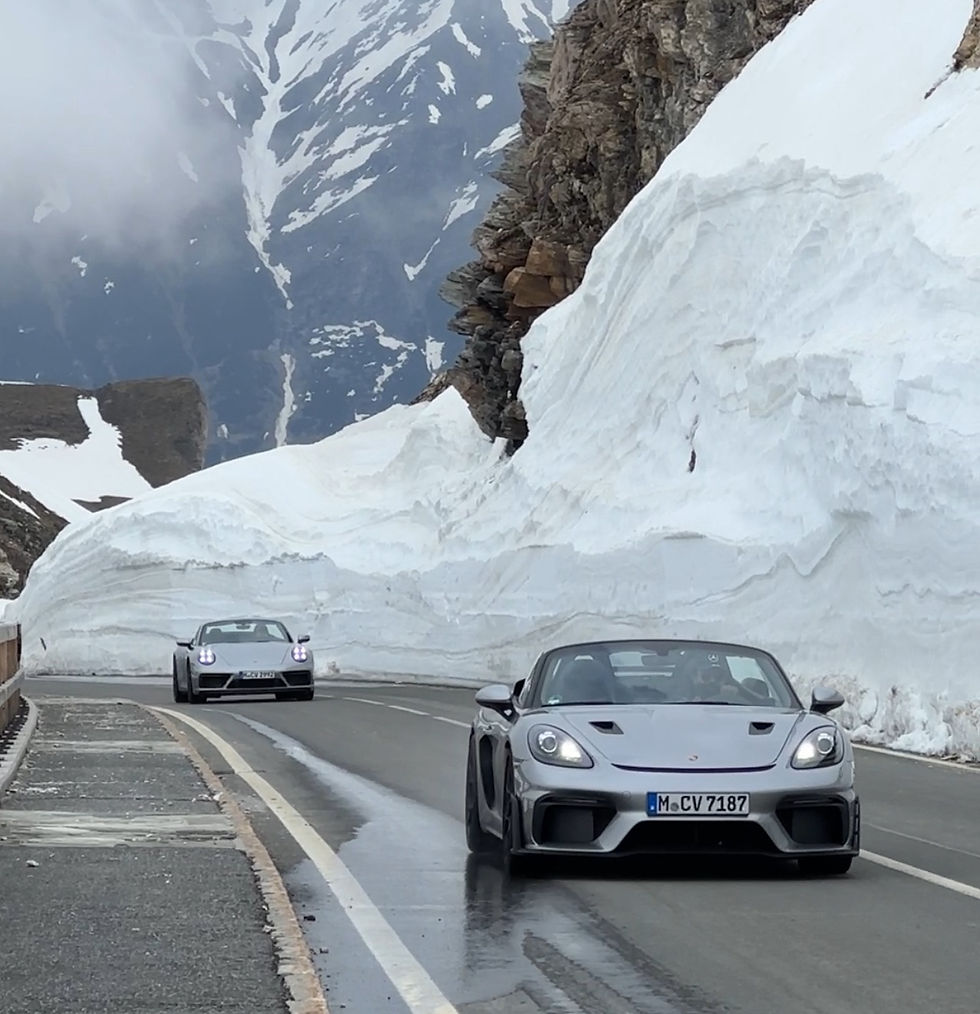
Early season opening can feature dramatic snow walls on the upper sections
Fuel and services are limited near the summit — plan refuelling before departure

HISTORY OF THE GRIMSEL PASS
The Grimsel route has long roots as a mountain crossing used for centuries by traders and herders before becoming a modern road. Its evolution into a paved alpine pass was driven in part by the development of hydroelectric power in the early 20th century.
Large dams and reservoirs were constructed to harness the power of glacial meltwaters, and the Grimsel road was developed to provide access for construction, maintenance, and transport. These installations not only contributed to Switzerland’s renewable energy infrastructure but also helped shape the dramatic landscape drivers experience today.
THE SWISS ALPS “BIG THREE”
The Grimsel Pass is most frequently driven together with the nearby Furka Pass and Susten Pass, forming Switzerland’s legendary Big Three alpine driving loop. Combined, these three passes deliver one of the most varied and rewarding high-alpine routes in Europe — balancing dramatic glaciers, flowing climbs, and open panoramas across some of the Alps’ most beautiful terrain.
OUR VERDICT ABOUT THE GRIMSEL PASS
The Grimsel Pass strikes a compelling balance between scenic clarity and approachable driving rhythm. Its wide curves, iconic reservoirs, and engineered landscape make it distinct from tighter, more technical passes — and perfect for drivers who love flow, space, and scale.
Like any great alpine road, Grimsel is best experienced not in isolation, but as part of a broader alpine journey — one that includes nearby passes to complete the picture of what the Swiss Alps have to offer.