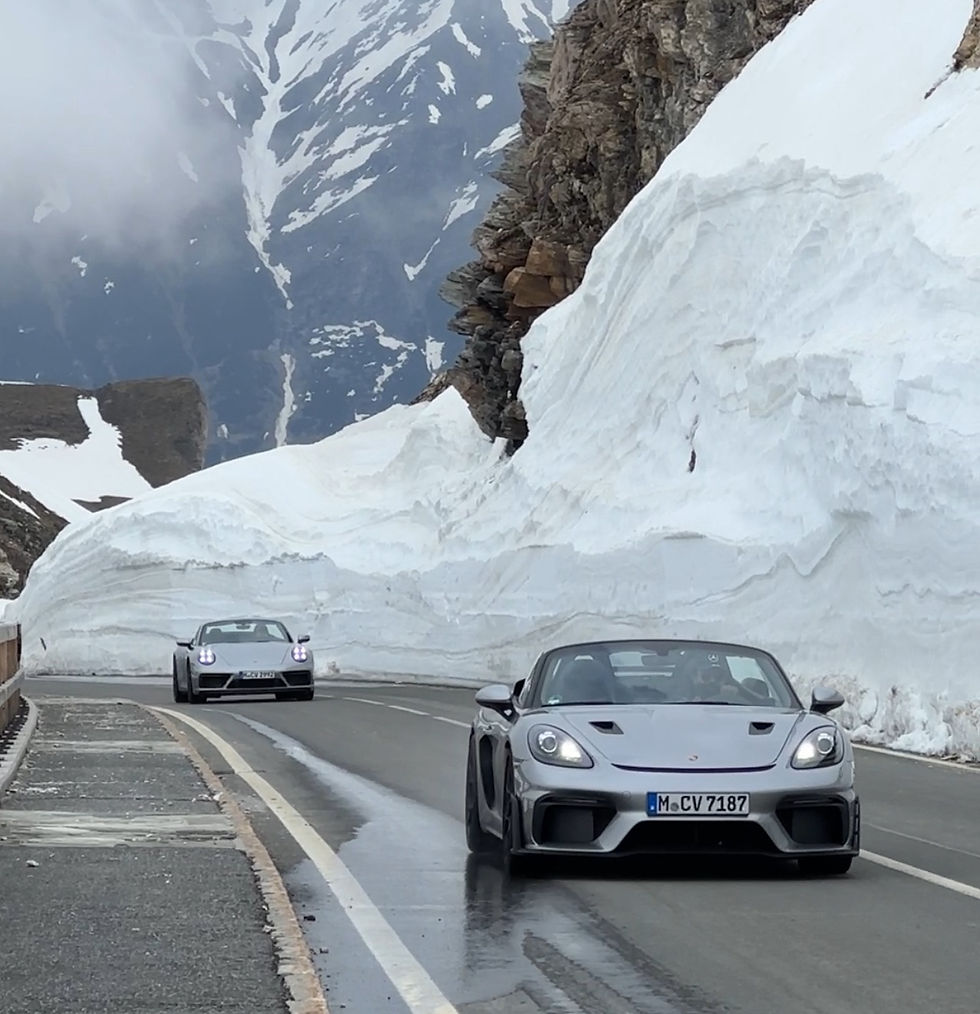
N-260 PYRENEES ROAD – THE SPANISH HIGH ROUTE AXIS
Stretching from the Mediterranean near Portbou deep into the heart of the Spanish Pyrenees, the N-260 forms the backbone of one of Europe’s most rewarding coast-to-coast mountain journeys. Often referred to as the Eje Pirenaico (Pyrenean Axis), this historic road links remote valleys, high passes, and authentic mountain towns — with natural onward routes toward Navarra and San Sebastián in the Basque Country.
Begin near the surreal Costa Brava / Cap de Creus coastline for a dramatic coastal warm-up, then climb steadily into one of Europe’s most under-explored mountain regions.

Scenic: ★★★★☆
Thrilling: ★★★☆☆
WHY THE N-260 FEELS DIFFERENT
The N-260 is not a motorway — and that’s precisely why it feels so special.
Rather than being engineered as a fast trans-mountain corridor, the road evolved from older regional routes that connected isolated valleys and border regions. The result is a driving experience that feels organic, varied, and deeply connected to the landscape. Expect:
Constantly changing scenery
Long, flowing mountain sections
Authentic towns rather than purpose-built resorts
A sense of discovery that’s increasingly rare in Europe
THE N-260 PYRENEES HIGH ROUTE
Widely regarded as one of the best ways to experience the Spanish Pyrenees, the high-altitude sections of the N-260 deliver sweeping views, dramatic terrain, and a true sense of scale.
From the western end of the route, it’s easy to:
Continue toward Navarra
Finish in San Sebastián, Spain’s gastronomic capital
Or cross into France toward Biarritz and the Atlantic coast
This makes the N-260 ideal as a true east-to-west axis, not a dead-end road.
SUGGESTED PACING · 4–6 DAYS
The N-260 spans approximately 520 kilometres (330 miles) — not including detours — connecting the eastern and western edges of the Spanish Pyrenees. Suggested rhythm:
Catalan Pyrenees: Coastal start, valley climbs, charming towns, and high viewpoints
Aragón core: The most dramatic canyon scenery and national parks
Western finish: Greener landscapes toward Navarra — perfect for continuing to San Sebastián
While the route can be driven faster, allowing time transforms it from a great road into a true journey.
A BRIEF HISTORY OF THE N-260 (EJE PIRENAICO)
The N-260 traces its origins back to centuries-old Pyrenean routes used for trade, seasonal migration, and cross-border movement between what are now Catalonia, Aragón, and Navarra.
Unlike Alpine passes designed to move traffic efficiently from one country to another, the N-260 developed as a lateral mountain corridor, following the natural contours of the landscape and linking communities along the Spanish side of the Pyrenees.
Its modern form emerged gradually during the 20th century, as Spain improved regional connectivity. Instead of replacing older paths with a single high-speed road, the N-260 absorbed and upgraded them — explaining its varied road widths, changing character, and constant shifts in scenery.
Today, the N-260 remains one of Spain’s most authentic mountain roads:not built for speed, but shaped by geography, history, and necessity.
A ROAD THROUGH TIME & NATURE
Starting in Portbou on the Mediterranean and extending west toward Sabiñánigo — with Jaca acting as a natural gateway — the N-260 offers extraordinary diversity.
Along the way you’ll encounter:
Dense forests
Deep gorges
Rolling hills
Snow-capped peaks
One of the most remarkable sections is the Congosto de Jánovas, often cited as one of the narrowest stretches of Spain’s national road network. Carved through towering cliffs, it stands as a testament to the engineering determination required to connect these remote regions.
HIGHLIGHTS ALONG THE N-260
Ribes de Freser: A charming foothill town and gateway to the Vall de Núria, surrounded by lush landscapes — an ideal early mountain stop.
Congost de Mont-rebei: A spectacular gorge carved by the Noguera Ribagorçana River, with cliffside trails and panoramic views for hiking enthusiasts.
Congosto de Jánovas: One of the most thrilling driving sections on the route — narrow, dramatic, and flanked by sheer rock walls.
Aínsa: A beautifully preserved medieval town, officially protected as a Historic-Artistic Site. Cobblestone streets, stone houses, and excellent local cuisine make it ideal for an overnight stay.
Ordesa & Monte Perdido National Park: An unmissable highlight for nature lovers, featuring towering cliffs, waterfalls, and diverse wildlife.
Optional detour:
The Principality of Andorra: Accessible via La Seu d’Urgell (not directly on the N-260). Known for alpine scenery, charming villages, tax-free shopping, and spectacular high-altitude roads.
Jaca: Just beyond the western end near Sabiñánigo, Jaca’s Romanesque cathedral and lively atmosphere make it a natural finishing point — or a springboard toward Navarra and San Sebastián.
TIPS FOR DRIVING THE N-260
Best season: Late April to October
Plan for weather: Mountain conditions can change quickly
Take it slow: This is not a road to rush
Stay overnight: Stretching the route enhances the experience
Prepare your vehicle: The Pyrenees reward a well-sorted car — convertibles and sporty SUVs work especially well
BEYOND THE DRIVE · GASTRONOMY & CULTURE
Northern Spain is one of Europe’s most exciting food regions — and on a route like this, timing matters. The best experiences come from planning driving days around:
The right lunch stops
Scenic viewpoints
Reservation windows
Done right, the rhythm feels effortless: great roads by day, genuinely great tables by night.
FASCINATING FACTS ABOUT THE N-260