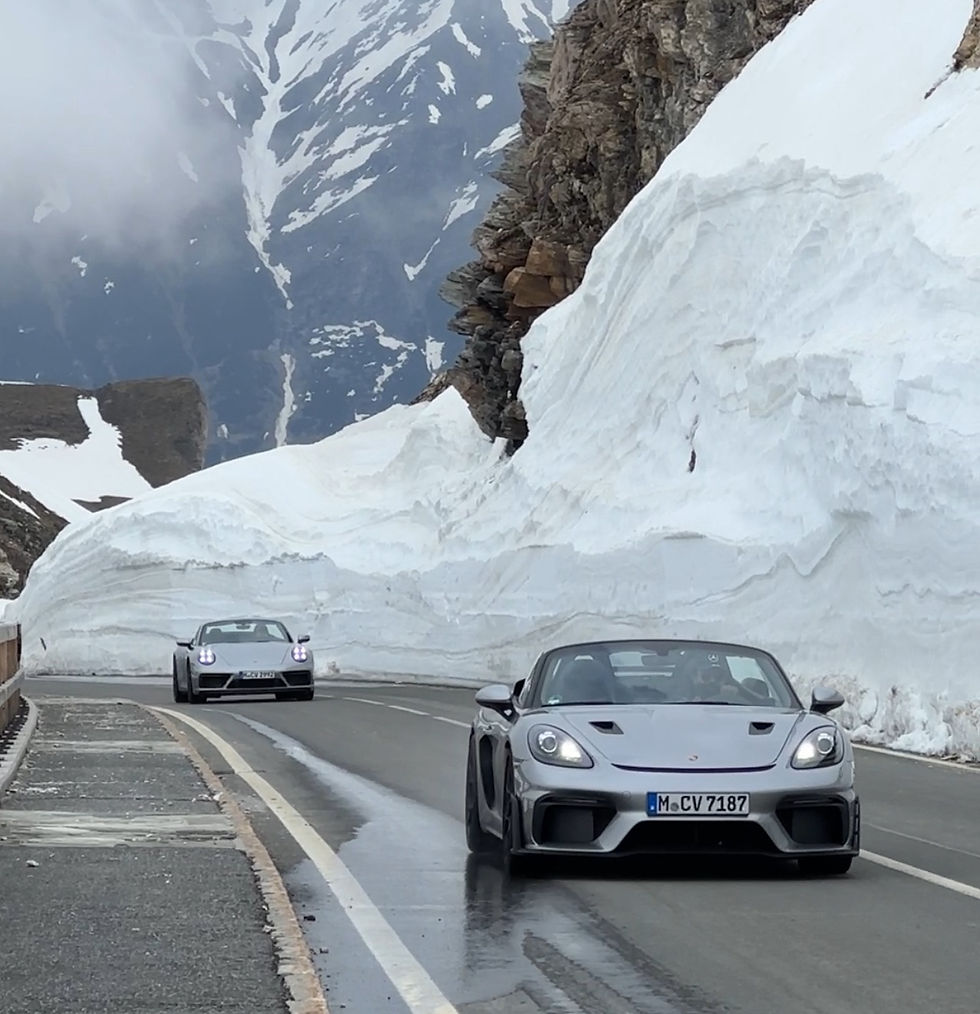
KLAUSEN PASS, SWITZERLAND – JUST 90 MIN FROM ZURICH
The Klausen Pass in Switzerland 🇨🇭 rises to 1,948 m (6,391 ft) and links the cantons of Uri and Glarus. It’s a raw, old-school alpine drive: narrow in places, technical by nature, and famous for its sweeping valleys, granite walls, and the unique high plateau of Urnerboden. Known worldwide among enthusiasts for the legendary Klausenrennen hill climb, Klausen delivers a pure mountain-road experience with a strong sense of history — the kind of pass that feels authentic rather than polished.

Scenic: ★★★★★
Thrilling: ★★★★★
DRIVING THE KLAUSEN PASS
Klausen may not be among the highest alpine passes, but don’t be misled — it can be challenging and highly rewarding to drive.
Approaching from the north (Zurich / Glarus side), the road begins through forest before gradually opening into alpine meadows. Early sections still feature historic cobblestone pavement, a reminder of how demanding this crossing once was.
The climb includes more than 100 curves and serpentines, several small tunnels, and narrow rock-cut sections that require focus and precision.
At Urnerboden, the landscape opens dramatically into a five-kilometre-long (3.1-mile) high-alpine plateau. Surrounded by granite walls on one side and open pasture on the other, this section feels expansive and exposed — particularly striking in a convertible.
Toward the end of the plateau, you can stop to photograph waterfalls cascading down the cliff face. After rainfall, these become especially impressive.
From there, the road is literally carved into granite all the way to the summit area near Klausenpasshöhe. On certain days, you may find yourself above the clouds in bright sunshine while the valleys below remain covered in mist.
Descending toward Uri, the road becomes steeper and more exposed. Tight corners, sheer drop-offs, and occasional oncoming traffic require patience and control. It’s a thrilling but unforgiving section — one that rewards measured driving rather than speed.
At the base lies Bürglen, birthplace of Wilhelm Tell, Switzerland’s national hero — a fitting cultural stop after an intense mountain drive.
ONLY 100 KM (62 MILES) FROM ZURICH
One of the most remarkable aspects of the Klausen Pass is its proximity to Switzerland’s largest city. From Zurich city centre, the pass is just 100 km (62 miles) away — approximately 1.5 hours by car, depending on traffic. Few true high-alpine passes are this accessible from a major international airport. You can leave Zurich after breakfast and be climbing into serious mountain terrain before midday. That accessibility makes Klausen ideal for:
A spontaneous alpine escape
A first Swiss mountain drive
A perfectly balanced Zurich-based itinerary
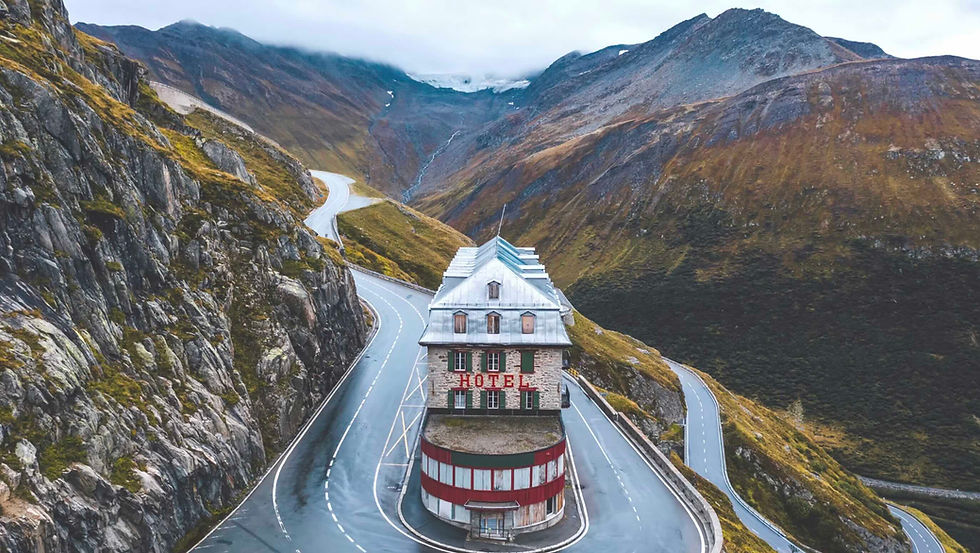
WHAT MAKES KLAUSEN UNIQUE
Klausen stands apart from Switzerland’s more engineered high passes.
It feels older and less polished
The road is narrower and more intimate
The canton border is not at the summit, but further down the Glarus side
The open plateau at Urnerboden creates a rare sense of alpine space
This is not a grand transit corridor. It is a mountain road with personality.
ACCESS & SEASONALITY
Outside of race years, the Klausen Pass remains relatively quiet due to nearby motorway alternatives. Typical opening period: Late May to OctoberSeasonal closure: November to late May (weather dependent). As with most scenic alpine roads, weekends and public holidays bring more traffic. Weekdays offer the most rewarding driving conditions.
WHY KLAUSEN IS WORTH IT
Klausen Pass is not about maximum elevation or dramatic engineering. It is about:
Technical rhythm
Old-school alpine character
Motorsport heritage
Accessibility from Zurich
Few mountain roads combine authenticity, history, and proximity to a major city so convincingly.
If you want a Swiss alpine drive that feels real — not staged — Klausen delivers.
HISTORY OF THE KLAUSEN PASS
Unlike major transalpine trade routes, Klausen began primarily as a regional livestock crossing during medieval times.
By the late 16th century, alpine travel had become significant enough that a travellers’ hospice was built at Urnerboden in 1590, offering shelter in an unforgiving mountain environment.
In 1717, a chapel dedicated to St. Nicholas of Myra was constructed near the summit. During the expansion of the modern road in the late 19th century, the original chapel stood in the way and was eventually replaced in 1938 by today’s Bruder-Klaus-Kapelle.
Modern road construction began in earnest in the late 1800s:
Road from Altdorf to Unterschächen (1870)
Full extension over the pass completed between 1893–1899
Interestingly, the canton boundary does not lie at the summit, but lower on the Glarus side — a small geographical quirk reflecting the pass’s organic historical development.
KLAUSENRENNEN – FROM 1922 TO 1934
Between 1922 and 1934, the Klausen Pass became one of Europe’s most prestigious mountain racing venues. The 21.5 km (13.4-mile) climb from Linthal (GL) to the Klausenpasshöhe (UR) challenged the greatest drivers and manufacturers of the pre-war era.
The road was narrow, the surface unpredictable, and the mountain unforgiving. Victories here carried enormous prestige. Thousands of spectators lined the route, turning the Klausenrennen into one of Switzerland’s defining early motorsport events.
After the final race in 1934, the legend remained — even as the engines fell silent.
THE KLAUSENRENNEN REVIVAL — 2027
From 24–26 September 2027, the Klausenrennen is scheduled to return in the form of a carefully curated historic revival edition.
The event will once again follow the original 21.5 km (13.4-mile) course, reconnecting the pass with its motorsport heritage nearly a century after its golden era. The revival is being developed with a strong emphasis on authenticity, historic vehicles, and the preservation of the original spirit rather than modern racing spectacle.
For enthusiasts, collectors, and drivers of significant historic machines, the 2027 edition represents more than an event — it represents a continuation of Klausen’s identity as a mountain road shaped by competition.
The engines return. The mountain remains the same.