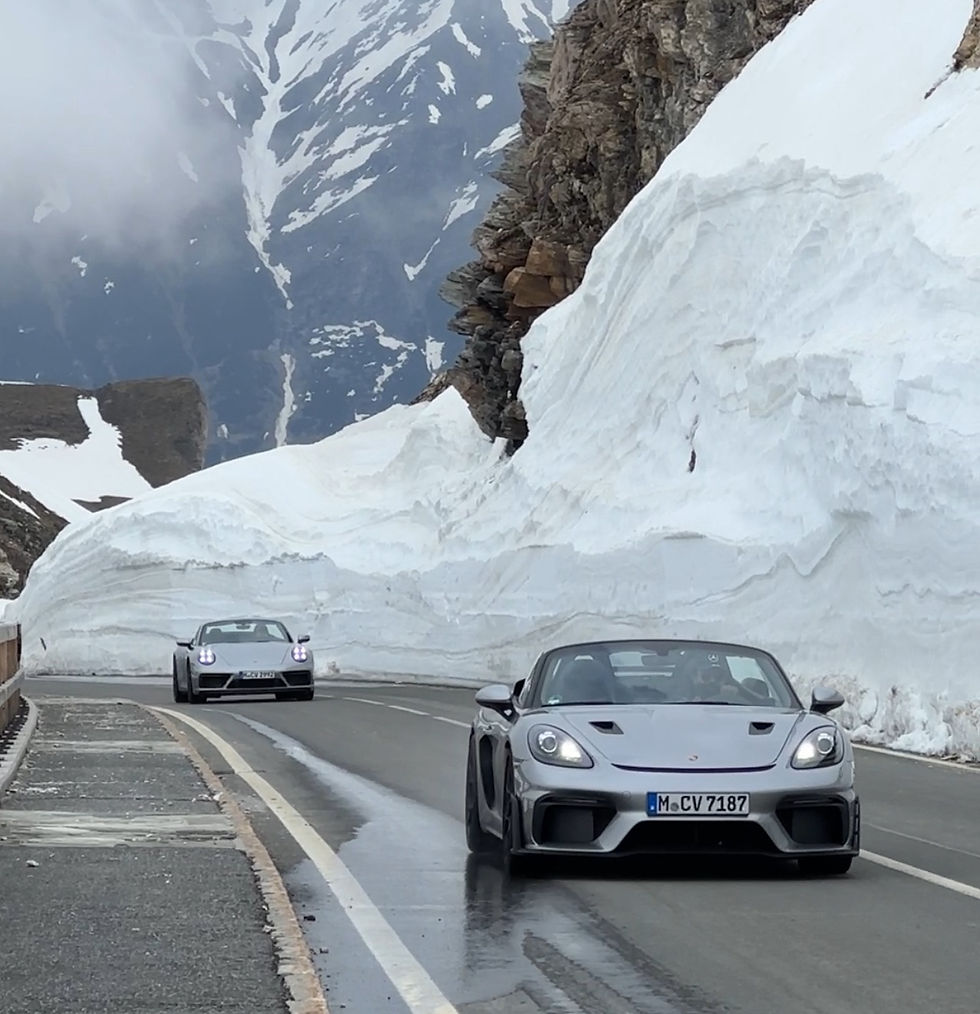
JULIER PASS, SWITZERLAND – EPIC ALPINE ROAD TO ST. MORITZ
The Julier Pass 🇨🇭 is one of the great alpine roads into St. Moritz — a high, open mountain drive cresting at 2,284 m (7,493 ft) between Savognin/Bivio and Silvaplana.
Unlike the tighter hairpin passes, Julier is all about flow: sweeping curves, long sightlines and a wide-open high-alpine atmosphere. It is scenic, confidence-inspiring, and accessible year-round — making it one of the most rewarding drives to St. Moritz in any season.

Scenic: ★★★★★
Thrilling: ★★★☆☆
WHY JULIER IS ONE OF THE BEST ROADS TO ST. MORITZ
Julier is an alpine transit road that still feels scenic, not stressed. You’re driving across a broad, rounded mountain landscape rather than clinging to a cliff all day — which makes it:
Relaxed and readable (great for less experienced mountain drivers)
Visually open (big views, big sky, long sightlines)
Easy to combine with Engadine loops (Albula / Flüela Bernina region)
It’s also one of the most important road links into the Engadine and is driveable year-round, which is rare at this altitude.
ROUTE OVERVIEW · SAVOGNIN / BIVIO → SILVAPLANA / ST. MORITZ
Summit: 2,284 m (7,493 ft)
North / west approach (Surses): more “road trip” rhythm and reservoir scenery
Engadine approach: sweeping descent into one of Switzerland’s most elegant valleys
Most people experience Julier as part of a bigger day:
Albula + Julier (two completely different personalities)
Julier → St. Moritz → lake district viewpoints
Julier as the “fast scenic connector” to reposition without killing the vibe

DRIVING NOTES · WHAT TO EXPECT
Julier is scenic first, technical second:
Fast, flowing sweepers rather than endless hairpins
Exposed high sections where wind and weather can change quickly
Good road surface overall (typically a “clean” pass to drive)
Watch for cyclists in summer and sudden fog/wet patches up top
If you want it to feel special: drive it early, let the day breathe, and don’t treat it like a shortcut — it’s too pretty for that.
BEST STOPS & PHOTO POINTS THAT ARE ACTUALLY WORTH IT
Julier summit area / Julier Hospiz — a natural pause point — big plateau energy, quick reset, and that “roof of the day” feeling.
Lai da Marmorera (Marmorera Reservoir) — one of the defining visuals on the Julier approach — and it comes with a real story (see below).
Engadine lakes (Silvaplana / St. Moritz region) — once you drop into the Engadine, the whole mood changes — polished villages, bright light, and that unmistakable high-valley elegance.
OPENING TIMES & WINTER REALITY
Good news: the Julier Pass is generally open all year.
But it’s still a high Alpine road. In winter you should expect:
winter driving conditions and sudden weather shifts
winter equipment required (and chains can be mandatory depending on conditions)
(Translation: it’s one of the best year-round Engadine access roads, but you still drive it with respect in winter.)

ST. MORITZ: THE HEART OF THE ENGADIN
Few mountain resorts are as famous as St. Moritz. Widely regarded as the birthplace of Alpine winter tourism, it has hosted the Winter Olympics twice and remains one of Europe's most prestigious mountain destinations.
Today, visitors come for far more than skiing. Luxury hotels, Michelin-starred dining, crystal-clear lakes and some of Switzerland's finest mountain roads make St. Moritz a year-round destination for travellers exploring the Alps by car.

A BRIEF HISTORY OF THE JULIER PASS
Julier is one of the “deep history” passes in Graubünden. It’s been used since antiquity and was an important route in the Roman era (and later) because it provides a practical line across the region toward the Engadine.
If you like passes that feel older than the car, Julier is exactly that — a road that sits on top of centuries of movement.
IN SUMMARY
If you’re looking for:
a year-round Engadine access pass that still feels scenic
big views + flowing rhythm instead of constant hairpins
a road with real history and a couple of genuinely cool stories
…the Julier Pass belongs on the list.
OTHER GREAT ROADS TO ST. MORITZ
While the Julier Pass is arguably the easiest and most direct route into St. Moritz, it is far from the only spectacular approach. The Engadin is surrounded by some of the finest driving roads in the Alps, each offering a distinct character and landscape.
Bernina Pass (2,328 m / 7,638 ft) One of the most dramatic roads in Switzerland, the Bernina Pass links the Engadin with Italy. Highlights include glaciers, high-altitude lakes and the famous Bernina Railway, a UNESCO World Heritage route that runs alongside the road in several places.
Flüela Pass (2,383 m / 7,818 ft) Connecting Davos with Susch, the Flüela Pass is known for its fast-flowing curves, open mountain scenery and rewarding driving rhythm. It is a favourite among enthusiasts exploring eastern Switzerland.
Albula Pass (2,315 m / 7,595 ft) A more intimate and technical drive, the Albula Pass is renowned for its engineering heritage and the spectacular railway bridges and tunnels of the UNESCO-listed Albula Railway.
Ofen Pass (2,149 m / 7,051 ft) Crossing the heart of the Swiss National Park, the Ofen Pass offers a very different experience. Dense forests, broad valleys and frequent wildlife sightings make it one of Switzerland's most scenic nature drives.
Together, these roads create some of the finest driving loops in the Alps, with St. Moritz serving as an ideal base for exploring the Engadin region.